
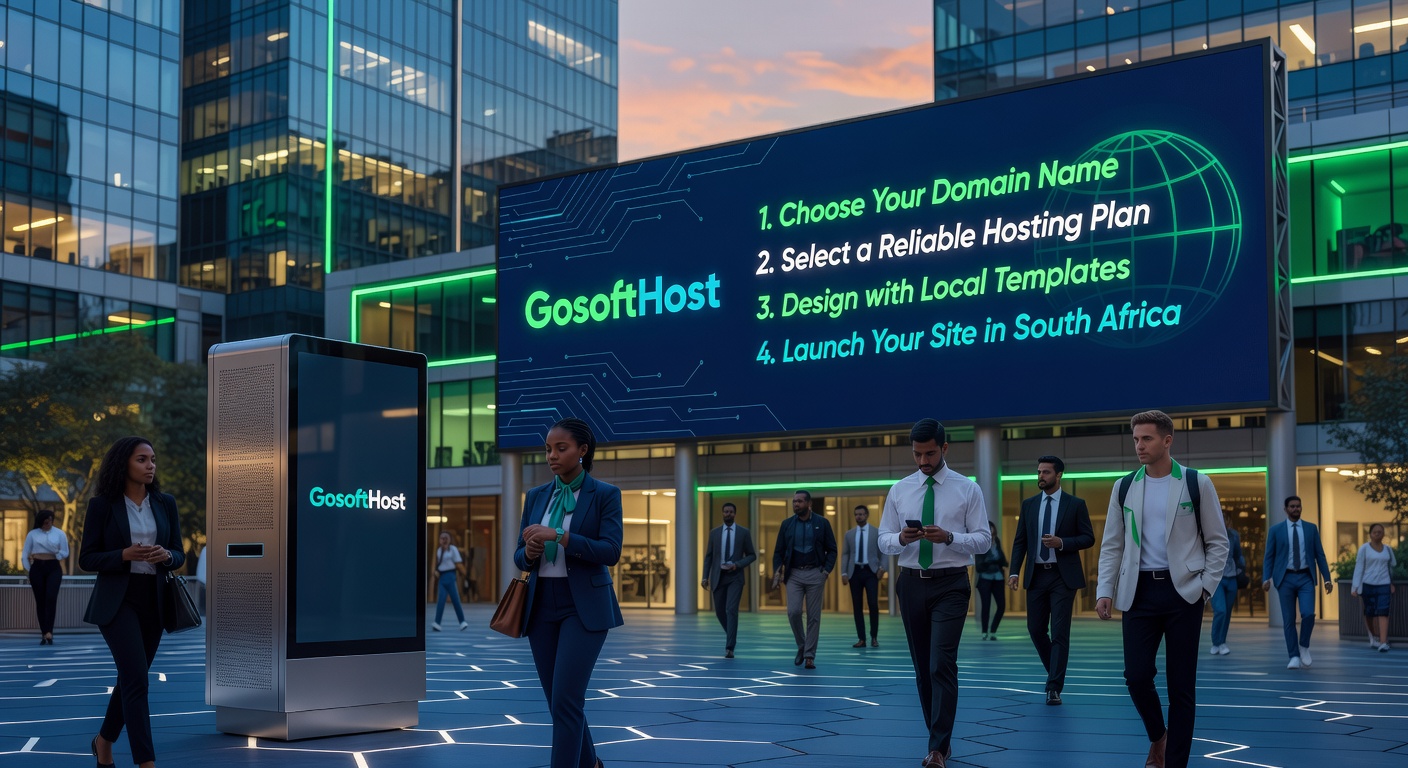
How to Start a Website in South Africa: Step-by-Step Guide for 2026
If you are wondering how to start a website in South Africa, you are not alone. More South African businesses, freelancers, creators, schools, churches, and online stores are building websites to reach customers, grow credibility, and generate sales online. Whether you are in Johannesburg, Cape Town, Durban, Pretoria, or anywhere else in the country, creating a website is more affordable and straightforward than ever.
In this guide, we explain how to start a website in South Africa step by step. You will learn how to choose a domain name, select the right hosting, set up WordPress, design your pages, and launch with confidence. We will also cover local considerations such as .co.za domains, payment in South African rand, and the benefits of local hosting.
1. Decide Why You Need a Website
Before you register a domain or buy hosting, define the purpose of your site. This is the first step in learning how to start a website in South Africa the right way. Your website should support a clear goal, such as:
- Promoting your business or services
- Selling products online
- Sharing a portfolio or personal brand
- Publishing blog content
- Accepting bookings or enquiries
- Building trust with local and international customers
For example, a plumber in Johannesburg may need a simple service website with contact forms and WhatsApp integration, while an online boutique in Cape Town may need eCommerce features, payment gateways, and shipping tools. Knowing your goal helps you choose the right platform and plan.
2. Register a Domain Name in South Africa
A domain name is your website address, such as yourbusiness.co.za. If you want to know how to start a website in South Africa, getting the right domain is one of the most important decisions. A good domain should be:
- Short and easy to remember
- Relevant to your business or brand
- Easy to spell and pronounce
- Free from trademark issues
Many South African businesses prefer a .co.za domain because it is local, trusted, and familiar to customers. You can also register other extensions such as .com, .org, or .net if your audience is global. If your business mainly serves South African customers, a .co.za domain can improve local relevance and brand trust.
When choosing a domain, try to avoid numbers, hyphens, and complicated spellings. If possible, register your business name and close variations to protect your brand online.
3. Choose Reliable Web Hosting
The next step in how to start a website in South Africa is choosing web hosting. Hosting is the service that stores your website files and makes your site accessible online. Without hosting, your website cannot go live.
When comparing hosting providers, look for the following:
- Fast server performance
- High uptime reliability
- Free SSL certificate
- One-click WordPress installation
- Email hosting
- Daily or regular backups
- Responsive customer support
- Pricing in ZAR
For South African websites, local hosting can offer important advantages. A hosting provider with infrastructure optimised for South African traffic can improve loading times for visitors in cities like Johannesburg and Cape Town. Faster websites usually create a better user experience and support SEO performance.
If you are just starting out, shared hosting is often enough for a small business website, blog, or portfolio. If you expect high traffic or need more power, you may later upgrade to cloud hosting, VPS hosting, or a dedicated solution.
Many beginners asking how to start a website in South Africa choose WordPress hosting because it simplifies setup and ongoing management. WordPress is flexible, widely supported, and suitable for most website types.
4. Build Your Website with WordPress
WordPress is one of the easiest and most popular ways to create a website. If you want a practical answer to how to start a website in South Africa, WordPress is usually the best place to begin. It powers millions of websites worldwide and works well for:
- Business websites
- Blogs
- Online stores
- Portfolios
- School and church websites
- Professional service websites
Most hosting providers offer one-click WordPress installation. After installation, you can log in to your dashboard and start building your site.
Here are the basic setup steps:
- Choose a theme: Pick a clean, mobile-friendly WordPress theme that matches your brand.
- Create core pages: Start with Home, About, Services, Contact, and Privacy Policy.
- Install plugins: Add essential tools for SEO, security, forms, backups, and caching.
- Add branding: Upload your logo, set your colours, and write clear messaging.
- Configure navigation: Make it easy for visitors to find important pages.
Your website should look professional on both desktop and mobile. In South Africa, many users browse websites on smartphones, so mobile responsiveness is essential.
If you plan to sell online, you can install WooCommerce on WordPress. This allows you to add products, manage inventory, and accept payments through supported gateways. That makes WordPress a strong choice for anyone researching how to start a website in South Africa for eCommerce.
5. Add Content, Optimise for SEO, and Launch
Once your website structure is ready, the final step in how to start a website in South Africa is to add useful content and prepare for launch. Good content helps visitors trust your brand and helps search engines understand your website.
Make sure your site includes:
- A clear homepage explaining what you offer
- An about page that builds trust
- Service or product pages with detailed information
- Contact information, including phone, email, and location
- A contact form or WhatsApp button
- Testimonials or reviews if available
For SEO, follow these basics:
- Use your target keywords naturally in headings and text
- Write unique title tags and meta descriptions
- Optimise images with descriptive file names and alt text
- Improve page speed by compressing images
- Use internal links between important pages
- Submit your sitemap to Google Search Console
If your audience is local, include South African references where relevant. For example, mention the areas you serve, show prices in rand, and create location-based service pages if needed. This can help your business appear more relevant in local search results.
Before launching, test everything carefully:
- Check your website on mobile and desktop
- Test forms and email delivery
- Review spelling and grammar
- Confirm SSL is active and your site uses HTTPS
- Check loading speed
- Make sure all links work properly
After launch, keep your website updated. Add new blog posts, update plugins, review analytics, and refresh content regularly. A website is not a once-off project; it is an ongoing business asset.
How Much Does It Cost to Start a Website in South Africa?
One of the most common questions related to how to start a website in South Africa is cost. The total price depends on your goals, but a basic website is often more affordable than many people expect.
Typical costs may include:
- Domain name: Usually billed yearly
- Web hosting: Monthly or annual payment, often available in ZAR
- Premium theme or plugins: Optional
- Web design: Optional if you hire a professional
- Maintenance: Optional but recommended
A small DIY website using WordPress and shared hosting can be launched on a modest budget. If you need custom design, advanced functionality, or eCommerce features, the cost will be higher.
The key is to start with what you need now and scale later. Many successful South African websites begin small and expand as the business grows.
Common Mistakes to Avoid
If you are learning how to start a website in South Africa, avoiding beginner mistakes can save you time and money. Watch out for these common issues:
- Choosing the cheapest hosting without checking reliability
- Using a domain name that is too long or confusing
- Ignoring mobile usability
- Publishing weak or incomplete content
- Skipping SEO setup
- Forgetting backups and security
- Not displaying contact details clearly
Your website should be easy to use, fast to load, and focused on helping visitors take action. Simplicity and clarity usually outperform cluttered designs.
Final Thoughts
Now you know how to start a website in South Africa. The process is simple when broken into steps: define your goal, register a domain, choose reliable hosting, install WordPress, build your pages, optimise for search, and launch.
Whether you are building a site for your small business, side hustle, portfolio, or online shop, the most important thing is to start with a reliable foundation. A fast, secure hosting plan and a professional website setup can make a real difference to your online success.
If you are ready to take the next step, GosoftHost makes it easy to launch your website with dependable hosting, WordPress-friendly plans, SSL security, and support for customers in South Africa and beyond.
Call to Action: Ready to build your site? Get started with GosoftHost today and launch your website with confidence.